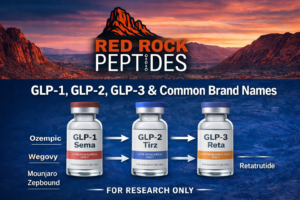



Interest in weight loss therapy research in St. George, Utah has grown rapidly over the past several years, reflecting a broader national focus on metabolic health, obesity science, and long-term weight regulation. As researchers continue to explore the biological mechanisms behind appetite, energy balance, and glucose metabolism, peptides and GLP-related pathways have emerged as some of the most studied areas in modern weight loss research.
Rather than viewing weight management solely as a matter of lifestyle choice, current scientific research increasingly frames it as a complex, biologically regulated process influenced by hormones, neural signaling, and metabolic adaptation. This shift has fueled extensive research into GLP pathways and peptide signaling systems that play central roles in appetite regulation and energy homeostasis.
This article provides a research-focused overview of why peptides and GLP pathways are so central to weight loss therapy science, who follows this research closely, and what the future of this field may look like—particularly for health-conscious communities like St. George, Utah.
St. George has experienced rapid population growth alongside national trends in metabolic health awareness. As more individuals focus on longevity, fitness, and quality of life, interest has expanded beyond cosmetic weight loss to include evidence-based weight loss therapy research.
Utah’s demographics include a wide range of physically active individuals, families, and aging populations, all of whom are increasingly engaged in conversations around metabolic efficiency, insulin sensitivity, and appetite regulation. These discussions often lead back to the same research themes: hormonal signaling, energy balance, and long-term weight maintenance.
As a result, scientific research related to peptides and GLP pathways has become highly relevant to readers seeking to understand the why behind modern weight loss therapy discussions—without focusing on treatment or prescription models.
GLP (glucagon-like peptide) pathways are central to many areas of metabolic research because they influence multiple systems involved in energy regulation.
In research settings, GLP-related pathways are studied for their role in:
Appetite signaling and satiety regulation
Glucose metabolism and insulin response
Gastric emptying and nutrient absorption timing
Neuroendocrine communication between the gut and brain
These pathways are not isolated; they interact with broader hormonal and neural networks that influence eating behavior, energy expenditure, and metabolic adaptation. This interconnectedness is why GLP research appears so frequently in scientific literature related to weight loss therapy research.
Peptides are short chains of amino acids that act as signaling molecules throughout the body. In laboratory research, peptides are studied for how they interact with receptors that regulate metabolism, hunger, and energy balance.
Within weight loss therapy research, peptide studies often focus on:
Receptor signaling efficiency
Dose-response relationships in model systems
Pathway selectivity and overlap
Long-term metabolic signaling patterns
Rather than targeting a single outcome, peptide research seeks to understand how multiple systems communicate and how metabolic regulation adapts over time. This systems-level approach is especially important when studying weight regulation, which is known to involve compensatory biological responses.
One reason GLP research has accelerated is the exploration of single-, dual-, and triple-pathway receptor signaling.
In research literature:
Single agonist studies typically focus on GLP-1 receptor signaling
Dual agonist research examines combined GLP-1 and GIP receptor pathways
Triple agonist research evaluates GLP-1, GIP, and glucagon receptor signaling together
These approaches allow researchers to study how overlapping pathways influence metabolic outcomes, appetite regulation, and energy utilization. The goal is not simply greater effect, but better understanding of pathway coordination and balance.
This layered research model has become a cornerstone of modern weight loss therapy science.
Interest in weight loss therapy research extends well beyond academic circles. In communities like St. George, Utah, several groups closely follow developments in peptide and GLP research:
Athletes and fitness-focused individuals track research related to appetite control, body composition, and metabolic efficiency.
Scientific teams study GLP pathways to better understand signaling mechanisms, receptor selectivity, and long-term metabolic regulation.
While this article does not address clinical use, clinicians often follow research trends to stay informed about emerging science.
Obesity and metabolic disorders are widely recognized as long-term public health challenges, driving interest in foundational research.
Many people simply want to understand why weight loss therapy has become such a prominent scientific topic and what the research actually says.
One of the most significant insights from modern research is that appetite and weight regulation are biologically defended systems. When weight changes occur, the body often responds with hormonal and metabolic adjustments designed to restore equilibrium.
Research into GLP pathways and peptide signaling helps explain:
Why hunger signals may increase after weight loss
Why metabolic rate can adapt over time
Why long-term maintenance is biologically complex
These findings have reshaped how researchers think about weight loss therapy—not as a short-term intervention, but as an area requiring long-term biological understanding.
Looking ahead, several trends are shaping the future of peptide and GLP research:
Multi-pathway signaling studies to better understand receptor interactions
Long-term metabolic adaptation research
Improved modeling of weight maintenance mechanisms
Exploration of individualized metabolic responses
Greater emphasis on outcomes beyond scale weight alone
As this research evolves, it continues to influence how scientists conceptualize weight loss therapy and metabolic health at a foundational level.
St. George’s combination of population growth, active lifestyles, and health-conscious culture makes it a natural environment for interest in metabolic and weight loss therapy research.
Rather than focusing on quick fixes, many readers in Southern Utah are seeking credible, science-based explanations for why certain pathways and compounds receive so much attention in research literature. Educational content that explains peptide and GLP science clearly—without making claims or promises—helps meet that demand.
Weight loss therapy research has entered a new era, driven by deeper understanding of biological signaling, metabolic regulation, and long-term adaptation. Peptides and GLP pathways sit at the center of this scientific conversation, not because of hype, but because of their foundational role in how the body regulates energy and appetite.
For readers in St. George, Utah, staying informed about this research provides valuable context for understanding broader discussions around metabolic health, fitness, and longevity—grounded in science rather than speculation.
This content is provided for informational and educational purposes only. It discusses scientific research and does not constitute medical advice. Research compounds referenced are intended for laboratory research use only and are not for human or veterinary use.